
Okay, so check this out—when I first tried a new browser extension wallet last year I was skeptical. Wow! I mean, I’d been burned by slow UIs and ugly permission prompts before. My instinct said: don’t trust a pretty onboarding screen. Initially I thought a flashy signup would mean more slick design than real security, but then I dug in and found somethin’ different about this one.
Really? Yep. The experience surprised me. The extension felt light, like it knew what it shouldn’t do as much as what it should. On one hand I care deeply about UX—on the other hand, I live by security checklists and mental models that are hard to convince. Actually, wait—let me rephrase that: I want a wallet that’s both quick and careful, not just one or the other.
When you use a lot of DeFi tools, you get a sixth sense for shaky wallets. Hmm… this one didn’t set off the usual alarms. There were subtle things: clear permission dialogs, network switching that didn’t silently inject RPC endpoints, and a permissions history that was actually readable. At first glance I thought it was another Wallet A or Wallet B clone, though actually Rabby had its own thoughtful touches.
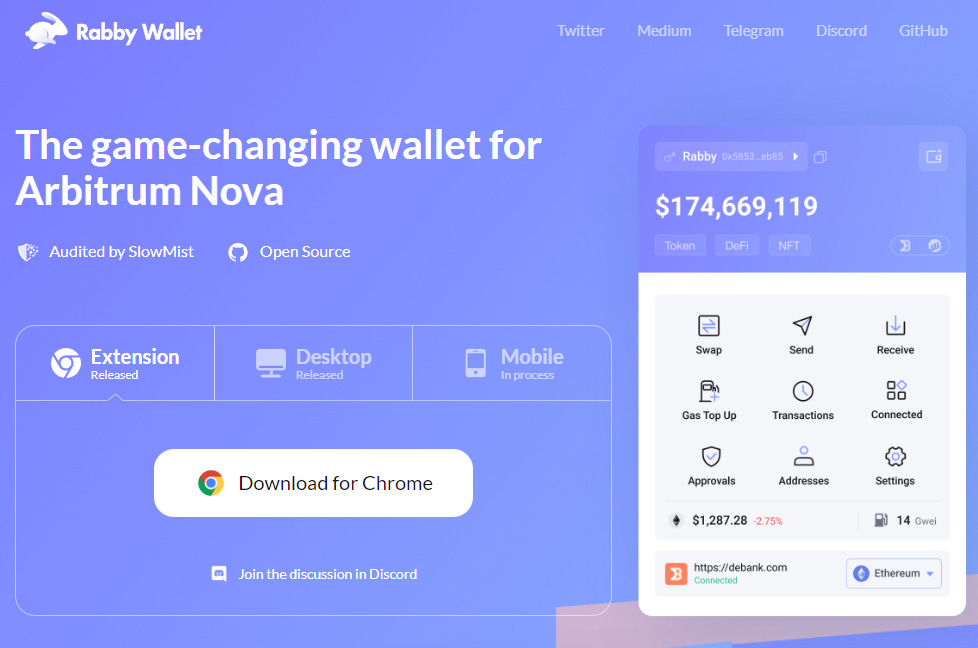
A hands-on summary: extension, features, and the app
I’ll be honest—I prefer browser extensions for day-to-day trades and approvals because they’re fast. Seriously? Fast as in sub-second approval flows when gas estimates are stable. But speed without guardrails kills wallets. Rabby wallet balances both reactive convenience and proactive protection in ways that feel grown-up. On a practical note, the extension gives you clear spend limits and a policy-style approval flow, which stopped me from signing a messy permit that would’ve drained a token. Also, oh, and by the way, importing accounts is straightforward—seed phrase, hardware wallet, or direct connect.
Initially I thought hardware-wallet support would be clunky, but it worked fine with Ledger and Trezor through the browser. On one hand that saved me time, though actually I still double-check transaction data on device screens. My process: sign, verify, breathe. The Rabby app, by contrast, is more for mobile convenience and account sync across devices when you want it. I’m not 100% sold on syncing every key across phones, but the option exists if you prefer it.
Check the download page if you want the exact installer and extension links—that’s where I grabbed mine. The rabby wallet download process was simple, and the site had step-by-step screenshots that helped me when I was half-doing it over coffee. The page also had a checklist for verifying extension authenticity, which I appreciated because phishing clones are everywhere.
One thing bugs me about most wallets: they either over-simplify approvals or they bury detail deep in settings. Rabby hits a middle ground: permit-based approvals show allowances in an easy-to-scan format, and you can set fine-grained revoking directly from the UI. That saved me from an unnecessary token approval the first week I used it. Minor tangent: I keep a tiny notebook of gas behavior per chain—call it nerdy—but it helps when mempools spike.
Security design is not just about cold storage. It’s about mental models that users can trust. Rabby uses clear language on approvals, warns when contracts are new or suspicious, and integrates safety checks with third-party services without making you a security analyst. Initially I thought third-party integrations would bloat the UI, but the wallet keeps them under a single “security insights” panel, which I liked. My gut said this feels safer than wallets that shout every possible risk at you, which just causes fatigue.
Now, there’s no perfect wallet. I’m biased toward tools that let me compartmentalize funds across accounts. Rabby supports multiple accounts and allows you to label and segment them. That feature alone helped me manage main trading capital versus stash funds. Also, tiny nit: sometimes the network dropdown feels overly long if you add a dozen custom chains—but that’s a small gripe.
On the performance side, the extension is snappy. Transactions queue properly and nonce management is sensible. There were a couple of edge-case hiccups when testing with experimental L2s, though the dev team pushed updates quickly. The community and GitHub issues felt active, which matters when you rely on a wallet for live trades. I filed one bug and got a helpful reply within days—real people, not canned answers. That gave me confidence.
Here’s what I liked most: the design choices favored clarity over cleverness. That matters when you’re approving a contract with zero reputation. My read: Rabby assumes users want to be safe but not slowed down by jargon. The balance is thoughtful, and honestly, it made me rethink some of my own assumptions about extension wallets.
Common questions
Is Rabby safe for DeFi trades?
Short answer: yes, with caveats. The wallet includes safety checks, clear approval flows, and hardware wallet support. But don’t skip basic hygiene: verify extension source, use a hardware wallet for the bulk of funds, and vet dapps before connecting.
Can I use Rabby with multiple chains and L2s?
Yes. It supports many EVM-compatible chains and layer-2s. Performance varies by chain providers, and some experimental networks may require manual RPC configuration. Expect occasional quirks with very new L2 rollups—nothing game-breaking though.
What about mobile use?
There is a Rabby app for mobile convenience. I mostly use the extension, but the app is handy for on-the-go checks and small interactions. If you want full trade throughput, stick to desktop and a connected hardware wallet for big moves.